Pay Now

republicriyaz@oksbi

Welcome To GEM Gastrosurgery Care
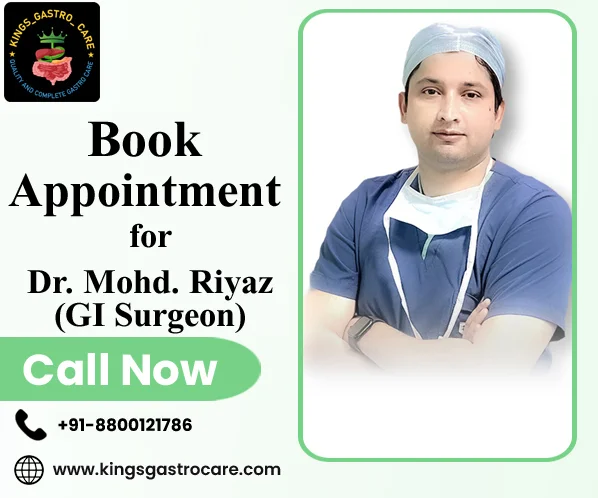
Dr. Mohammad Riyaz is a skillful GI Surgeon. He has completed his Super Specialisation in GI Surgery & Liver transplantation from Stanley Medical College, Chennai.

  • He has done his senior residency in Surgery at the reputed All India Institute of Medical Sciences, New Delhi.
  • He has presented his work at national and international levels and has won many awards.
  • Dr. Riyaz has authored various national and international publications.
  • Having successfully treated numerous patients, he has been widely acknowledged for his versatile and patient-centric approach.

Qualification:

  • MBBS, MS (General Surgery). M. Ch (Gastrosurgery). FALS (Colorectal)
  • Fellow of the American College of Surgeons
  • Ex. Senior Resident AIIMS, New Delhi
  • Ex. Consultant BLK Max, New Delhi
  • Ex. Resident Stanley, Chennai
  • Ex. Resident A.M.U., Aligarh

Experience:
Presently working as Senior Consultant- Shri Ram Murti Smarak Institute of Medical Sciences, Bareilly

Previous Experience:

  1. Associate Consultant GI Surgery, Bariatric & Advanced Laparoscopic Surgery at BLK-Max Super Specialty Hospital, New Delhi.
  2. Senior Resident-General Surgery at JN Medical College, Aligarh.
  3. Senior Resident-General Surgery at All India Institute of Medical Sciences, New Delhi.
  4. Senior Resident- GI Surgery and Liver Transplantation at Stanley Medical College, Chennai.

Bariatric Surgery

Bariatric Surgery

SEE MORE

Gastrointestinal (GI) cancer surgery refers to surgical procedures performed to treat cancers that affect the digestive system.

Robotic Surgery

Robotic Surgery

SEE MORE

Robotic surgery can be used to treat conditions affecting your heart, digestive system, bladder, prostate and more.

Laparoscopic Surgery

Laparoscopic Surgery

SEE MORE

Removal of the gallbladder using small incisions. This is a common procedure for treating gallstones and gallbladder diseases.

GI Surgery

GI Surgery

SEE MORE

Esophagectomy: Removal of part or the entire esophagus, often with reconstruction of the digestive tract using the stomach or other tissue.

Not sure what to do?

What our Patient Says

Doctors and staff are supportive and well behaved.totally satisfied

Abhishek Kumar
Abhishek Kumar
Patient

Excellent doctor,great humanitarian

neha rajpal
neha rajpal
Patient

Blogs

13 Jun, 2026 Latest news
Why Choosing the Right Specialist Matters

A few years ago, a patient in his 50s came to us after being treated for liver disease for several years. He h

Read More
09 Jun, 2026 Latest news
Why Should I See a Gastrosurgeon?

A patient recently came to our clinic after spending nearly two years treating recurring stomach pain. He had

Read More
05 Jun, 2026 Latest news
When Is Weight Loss Surgery the Right Choice?

A patient in his early 40s recently visited us after trying almost everything to lose weight. He had followed

Read More
01 Jun, 2026 Latest news
When Is It Needed and How Can It Save a Life?

A few months ago, a middle-aged businessman came to our clinic after spending nearly a year treating what he t

Read More
20 May, 2026 Latest news
Best Gastro Surgeon

Gastrointestinal disorders can affect the stomach, intestines, liver, pancreas, gallbladder, and digestive tra

Read More
16 May, 2026 Latest news
Best Liver Surgeon

Liver diseases can become serious if not diagnosed and treated at the right time. Conditions such as liver cir

Read More

FAQ

Gastrointestinal surgery encompasses a wide range of procedures that treat benign (noncancerous) and malignant (cancer) conditions that affect the body's digestive system.
The GI tract is another name for your body's digestive tract. It consists of several tube-like organs joined together—starting at the esophagus in the mouth and ending at your anus. Each piece of the GI tract plays a role in how your body digests (breaks down) food and nutrients. Organs that make up the GI tract include: Esophagus Stomach Small intestine (small bowel) Large intestine (colon) Rectum Anus The digestive system also includes organs that aren't part of the GI tract. These organs include: Gallbladder Liver Pancreas
Both gastroenterologists and GI surgeons diagnose and treat conditions affecting the digestive system. Gastroenterologists are trained in internal medicine and receive additional training in problems of the digestive system. They treat GI conditions medically (such as with medicines) and perform nonsurgical procedures, such as colonoscopies.
Individuals with a body mass index of 35kg/m2 and a weight related condition (diabetes, sleep apnea, high blood pressure) or 40kg/m2 or greater are eligible for bariatric surgery.
Individuals who do not meet the BMI criteria are typically not candidates for bariatric surgery. Someone with complex medical and surgical needs may meet the BMI criteria but after meeting with a surgeon, it can be determine that the individual risk is greater than the potential benefit of the surgery. These situations are rare and are discussed individually with your care team.
Individuals interested in scheduling an appointment with the Penn Bariatric and Weight Loss Surgery Program should call 800-789-7366 (PENN). Patients already enrolled in the Penn Bariatric and Weight Loss Surgery Program should call their surgeon office directly.
Get Direction